

Week Three: The Missing Link, and the Girl Who Never Missed a Day
Dispatch Three from the CVUSD Summer Pilot
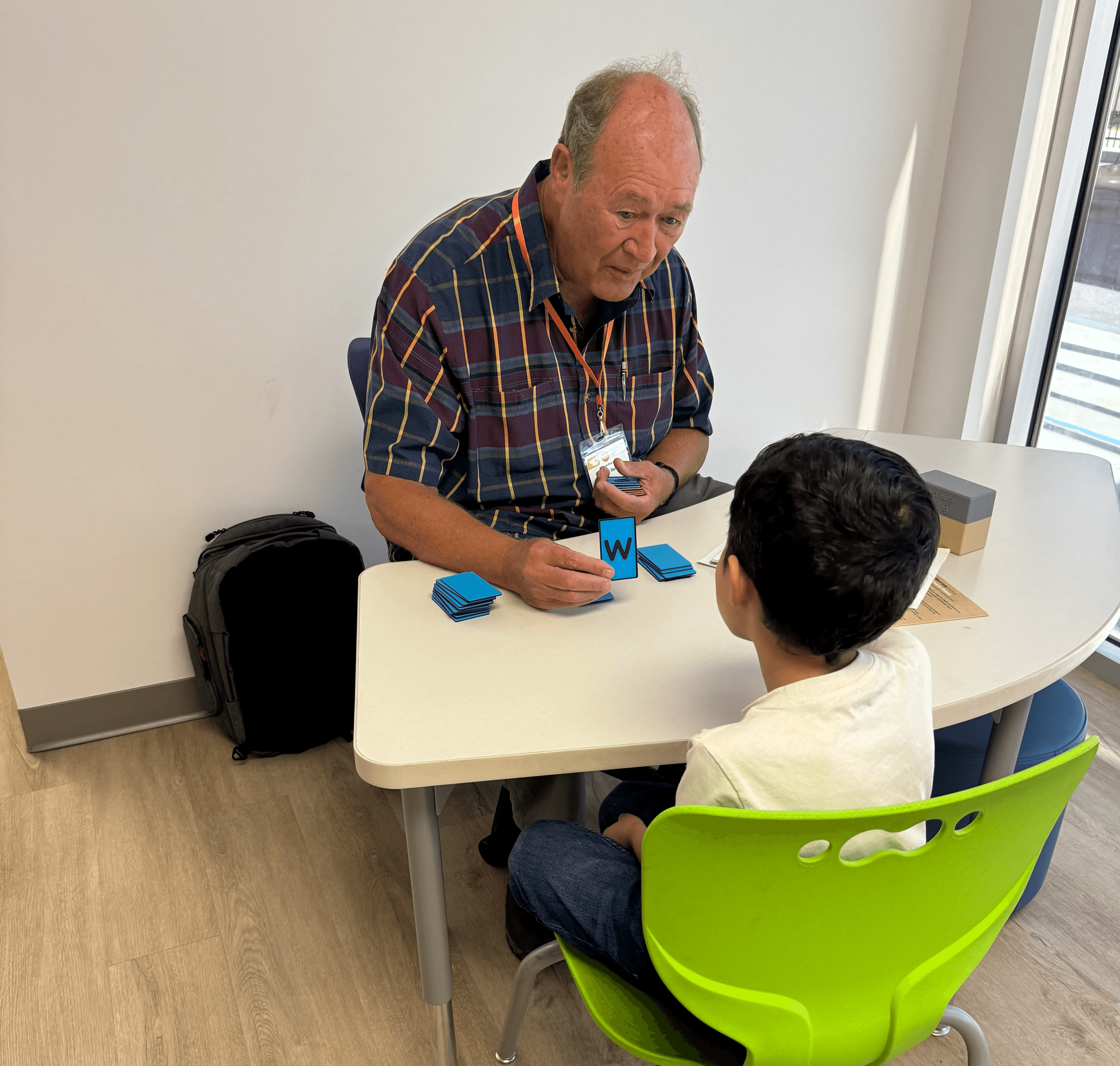
This was a thin week by the numbers. The Fourth of July holiday pulled the whole calendar toward it, and families started their holidays early. A few of the kids I’d been working with didn’t come at all this week, and the ones who did came in smaller, quieter groups. In a pilot already short on time, a stretch like this could feel like a loss.
It didn’t. Because the kids who showed up showed up ready. And one of them gave me something I’ll be thinking about for a long while.
The Girl Who Never Missed a Day
There’s a girl in my Mountain Vista cohort who has been there every single day since the pilot began. Not most days. Every day. Through the chaos of week one, through the shortened week two, through this holiday-thinned stretch, her seat was filled.
When we started, she knew fewer than half her letter sounds. Blending was not on the horizon. It was hard to picture, honestly, in those first sessions, how far she’d have to travel to get to a word.
This week she blended CVC words with confidence.
I want to be careful not to oversell a single child’s arc, because these are early results and the full picture won’t be clear until the pilot ends and the data is in. But I also won’t undersell what I watched happen at that little table. A child who could not reliably name half her letters in mid-June is now pulling three sounds together into a word and looking up like she just found a door she didn’t know was there.
The thing I keep returning to is the attendance. She made the biggest gains, and she was the one who never missed. I’m not going to dress that up as a controlled finding from a handful of kids. But it tracks with everything I believe about how this works. Reading isn’t built in a breakthrough. It’s built in reps. The child who gets the reps gets the reading. She got the reps.
What Ms. M Named
Last week I wrote about Ms. M, the teacher whose room I’ve been working in, and how she went from questioning my presence to welcoming it. This week she gave me something more valuable than acceptance. She gave me language.
Ms. M and her colleagues teach from the 95 Percent Group phonics curriculum. It’s a strong, well-regarded program grounded in the science of reading. But she told me something that stuck with me, which is that she and her fellow teachers sometimes struggle to take that curriculum and make it stick. The instruction is sound. The gap is in the practice, in the bridge between what a child is taught and what a child can actually do on their own.
She looked at what the kids were doing on the bolt and told me she thought this was the missing link. The tactile piece. The part that takes the curriculum off the page and puts it in a child’s hands, where the sounds stop being a lesson and start becoming a skill.
I didn’t put those words in her mouth. She found them on her own, watching her students. And they matter more than anything I could say about my own product, because she’s the one standing between a curriculum and a classroom full of kids every day. When the person doing the hardest part of the work tells you your tool is the piece that was missing, you listen.
What I Learned at North Shore
I spent time this week at North Shore with the other volunteers, and I came away with a lesson…Although definitely not the one I expected.
The kids were enjoying themselves, and engaging with the system - but they weren’t advancing as quickly as they could have. When I watched closely, I could see why. The volunteers were slipping into the habits most of us carry from how we were taught to read: mixing letter names with sounds, introducing too many new sounds at once, or taking small intuitive shortcuts that quietly work against the most effective possible learning process.
I saw one volunteer using the “ar” digraph nut to form “c-ar”; when the child needed to build “c-a-r” one sound at a time. I saw another move through a dozen unfamiliar letter sounds with a child who was still shaky on the first few.
These weren’t careless mistakes. They were instinctive ones, like “a real word will help them learn faster than a pseudo-word”. They’re the reflexes of adults who learned to read long ago. And in many ways, overriding that instinct is exactly what the system is designed to do.
When I sat down and worked the sessions according to the method, the same kids picked up learning speed and engagement. The volunteers saw and felt it instantly. There was a visible aha moment in the room: the difference wasn’t the children, and it wasn’t the tool. It was the approach to using the tool.
Here’s the honest part: I did cover the fundamentals in training. But these are big-hearted, unpaid folks who had never done anything quite like this, and I don’t think any of us — myself included — fully understood what the method would require until they were sitting across from a child they had never met before.
Some of the specifics from training didn’t fully land until that exact moment, when they saw the contrast in my approach. Some volunteers went into those first sessions without having studied the method as closely as it deserves. That’s not a failure of willingness. It’s a training gap. And that gap is mine to close.
Watching those kids accelerate when the method was followed correctly showed me exactly where to put my energy next. Not on the tool. On the training.
The Boy Who Found Ten Minutes
One more before I go. There’s a boy who struggled with focus from the start. Sitting still was hard. Attention was hard. In the early days, a full session felt like a lot to ask of him.
Now he lights up when it’s his turn. He focuses for his ten minutes, and more than that, he’s excited to read. Not compliant. Excited. There’s a difference between a child who tolerates a reading session and a child who looks forward to it, and he crossed that line somewhere in these three weeks.
That’s the part that doesn’t show up cleanly in an assessment. The joy. The moment a kid stops seeing reading as a wall and starts seeing it as a thing they get to do. I saw a lot of that this week, in a week that was supposed to be too short and too scattered to produce much of anything.
What’s Ahead
Three weeks in, and the pilot is nearly complete. These are early results, and I mean that as a promise rather than a hedge. The real report comes after the pilot closes, when the endline assessments are in and I can say something grounded about what actually moved and by how much. I’m not going to get ahead of the data.
But I’ll say this. There is something special about watching development arrive this early, before you had any right to expect it. A girl blending who couldn’t name her letters a month ago. A teacher finding the words for why it works. A boy who found ten minutes of focus and a reason to use them. Volunteers who saw the difference and want to close the gap. That’s a good week, thin attendance and all.
We have our final sessions ahead, and then the post-assessments early the following week. Soon I’ll be able to trade impressions for numbers. I’m looking forward to both.
This is the fourth post in a weekly series documenting the Word Nuts Reading summer pilot in Coachella Valley Unified School District. New updates are posted each Thursday or Friday throughout the program.
Michael Land is the founder of Word Nuts Reading, a sound-first early literacy system built around 3D-printed phonics manipulatives. Patent pending.